Mobile App Will Transform Data Entry And Collection In Clinical Studies, Company Says

Mobile App Will Transform Data Entry And Collection In Clinical Studies, Company Says

When most people think of clinical studies, they think of cold, white, sterile spaces full of computers, test tubes and scientists. But imagine the possibility that your own smartphone is a lab of sorts, ripe for data entry and collection and the critical component of an ever-expanding scientific knowledge […]

Design, Development, Business & Creative Help Wanted: NYU Healthcare Makerthon

Hi Everybody!

Recently, I was fortunate enough to be included in the 2016 NYU Healthcare Makerthon – an initiative between the NYU Entrepreneurial Institute & the NYU Langone School of Medicine. The goal of the Makerthon is to solve an important, health-related challenge by completing some step-work:

  • Identify the challenge,
  • recruit a quality team and then,
  • together, develop a solution into a viable venture.

My challenge is to “Re-imagine the medical research process to give participants a better experience.”

Does the number “$2.8 billion” sound familiar? If it does, you might work in clinical research. If it doesn’t, that number (and 10-15 years) is what it takes to get a therapy FDA-approved and to the public. PhRMA companies spent almost $60 billion on R&D in 2015. The NIH kicked-in an additional $31 billion.

Anyone who has ever looked at the numbers or attended a study Investigator’s Meeting knows, poor study enrollment and retention account for a huge portion of those costs.

Clinical trials account for nearly 40% of the US pharma research budget and total around $7B per year. The estimated cost of patient recruitment is 40% of the total budget, or $1.89B.

If a potential therapy is able to pass a recruitment feasibility assessment, the costs of enrollment often leads to study discontinuations and therapies that “die on the vine”. Additionally, sponsors may be forced to loosen study eligibility criteria to improve enrollment, only to hand the FDA under-powered data that is too weak to properly evaluate.

Before anyone clicks the back button because they (understandably) have a tough time feeling empathetic over Big Pharma’s recruitment woes, let me assure you I’m not trying to inspire empathy. There is more to the story.

Most of my research background has been limited to clinical trials with pharmacological interventions. But, more recently, I’ve been involved with other types of medical research at NYUMC’s Dept. of Radiology and Center for Biomedical Imaging. We have an amazing team of brilliant scientists, physicists, doctors & engineers (think Matt Damon in Good Will Hunting) – all working to improve patient outcomes through innovative imaging methods. The way I like to explain it to people who don’t regularly write mathematical formulas on window panes, is to try to remember what a television’s picture looked like in the 80’s and compare it with what you see today when you walk into Best Buy. There’s HD, 4K, curved screens, amazing sound, 3-D and VR. The quality of TV sets and peripherals has improved dramatically since Johnny Carson was on weeknights at 11:30 ET.

That’s essentially what our researchers are doing with medical imaging technology like MRI, PET, post-processing software, sequence development & 3-D printing. We move forward by recruiting study participants who graciously volunteer for imaging scan(s).

Some participants have a diagnosis such as Alzheimer’s, cancer, osteoarthritis or Parkinson’s. Others are healthy volunteers whose images are used for comparisons. From what i’ve observed, the participant’s experience is usually good enough for them to refer their friends and family to us.

I use imaging research as an example, hoping to soothe any lingering beliefs that medical research is confined to corporate interests. I admit, it’s easy to become jaded with all the negative press surrounding the pharmaceutical industry. But, to their credit, Hep C (associated with 19,659 deaths in 2014) is now curable in > 90% of patients (within < 12 weeks of treatment).

New pharmaceutical therapies have also contributed to a huge reduction in the amount of cancer, autoimmune and heart disease-related deaths over the last decade. But meanwhile, all over the world, researchers are developing technologies, medicines, prosthetics, implants, procedures, apps, software & naturalistic therapies (just to name a few) aimed at lengthening and improving the quality of human lives. Sure, it’s not all altruistic, but if people are earning a healthy living by developing these therapies, IMHO, it’s as it should be.

It seems to me that finding a solution to research recruitment/engagement challenge could cut R&D costs, resulting in lower healthcare costs and faster delivery of therapies to the patients who need them. But I digress.

After brainstorming potential solutions and getting some ideas on paper, I discovered the WordPress forums and managed to put some of my ideas into a website. I’m not a web guy and while building it, I wasn’t sure what may take shape. But I really enjoyed it as a creative outlet and it was therapeutic for me. TrialSphere also gave me an opportunity to shed some light on an idea that I had found tough to articulate.

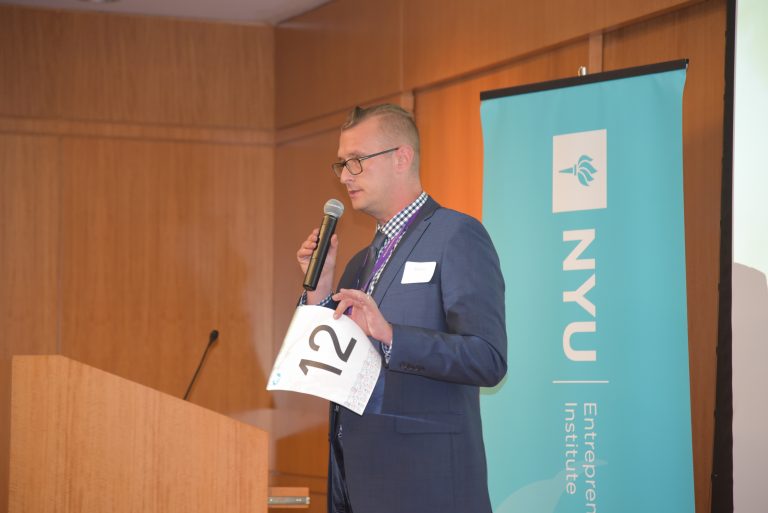
Joining NYU Langone School of Medicine has exposed me to more opportunities than I can keep tabs on, including this Makerthon challenge. On 10/26/16, Makerthon participants gave brief overviews of their challenges to an audience of mostly NYU & NYU Langone Medical Center community members. After we said our piece, two Apple, Inc. engineers presented the capabilities of iOS, ResearchKit, CareKit and HealthKit. These open-source development platforms are powerful and the timing is perfect to build them into the research recruitment/engagement space. With the right team, we could leverage these platforms to build a simple, intuitive, powerful and scalable solution for this challenge.

My next step in the Makerthon project is recruiting a team of 3-5 people to join me. Ideally, I need a developer, designer and someone with general business skills. None of these skills are part of my background, but I can sure help navigating the research environment.

The Makerthon’s Phase II takes place November 18-20 (RSVP here.). This phase involves working with top healthcare investors, entrepreneurs and startup experts to help develop the idea into a viable venture. The top 4 teams selected by a panel of healthcare startup experts will receive cash prizes totaling $10,000 and advance to Phase III – “Venture Support” (Jan. 19-Feb. 19).

So, here is my call to YOU for action:

  • If you’re a developer, designer, business person, or,
  • if you have a desire to crack this challenge and believe you have something to contribute … please don’t hesitate to contact me directly or leave a comment below.

Enjoy the Cubs winning the World Series and Happy Halloween Everyone!

Many Thanks,

Steve Stork

After the Clinical Trial: What’s Next for the Volunteers?


According to a 2013 CISCRP survey, 95% of clinical trial volunteers say they would consider participating in another study. The study reports that most people choose to complete a clinical trial for the following reasons:
• compensation
• to keep a commitment
• to gain knowledge of their disease
• positive response to treatment
• free procedures, study medication and study related medical care
• the relationship they built with the study staff
But what happens when the study is over? Where does the study volunteer go?

Many Investigators also operate a private practice, making it easy to continue a study volunteer’s treatment. For those investigators who do not have a private practice, it is important think about after-care. Many investigators are well-connected in the local medical community and are happy to reach out to other doctors and even set up a first appointment.

Patient Assistance Programs:

Clearly, many volunteers are attracted to clinical trials because participation is usually free and insurance is not required. Some studies will include a long-term, open-label extension, which means that the volunteer can continue to receive the study drug and maintain regular visits with the study staff for extended periods of time. But if this is not offered, Patient Assistance Programs (PAP’s) may be an option.

PAP’s are provided by most drug companies to help patients cover the cost of medicines. These programs are available for most brand name and generic medications. Each program has different eligibility criteria, but typically the applicant must not have private or public insurance coverage and have an annual income below a specified amount. People who qualify may be eligible to receive their medications at little to no cost. Investigators can usually help with the application process. Needymeds.org is a good place to start.

Plugging into the community:

Another tool is getting a clinical trial volunteer plugged into the community. There are national organizations such as The National Alliance on Mental Illness, The Alzheimers Association and The American Cancer Society, whose local chapters throughout the US provide in-person support groups and other valuable resources. Also, there are now social networks such as Patients Like Me, Inspire and other disease-specific communities where patients can share resources and support each other online.

Maintain Communication:

More is being revealed about study volunteers and their desire to be kept in the loop about a studies progress. Like any relationship, communication is key. Keeping volunteers updated on study results can let the volunteer know that they are part of something bigger and not just a “subject”. This type of communication could be in the form of a phone call, email or newsletter. If investigators could designate one staff person to update volunteers, it would really show the sites appreciation and keep the volunteer engaged.

Have you had any experience with these resources? Or, Do you know of any other resources that could ease the transition from clinical trial to traditional care? Tell us about it below!


Is Apple’s “Research Kit” a Clinical Trial Game Changer?

Is Apple’s “Research Kit” a Clinical Trial Game Changer?

Apple’s March 09, 2015 Announcement did not disappoint, especially to us in the clinical research field. Today, Apple again managed to tell us what we want before we even know we want it, but researchers are asking:  Is Apple’s “Research Kit”  a Clinical Trial Game Changer?

Research Kit is a prime example. This open source software will allow researchers to collect valuable health data from over seven hundred million iOS users. Users may use E-consenting technology and share their health data with researchers, while keeping it private from Apple.

Apple’s formula for success so far has been in the products ability to give the control to the people. They provide the platform and the people provide the value. We can see this every day as new and useful apps hit the app store. There is no reason to believe that Apple’s focus on medical research will be any different.

While the Apple Watch is not yet mainstream, the same freedom given to app developers will be a major ingredient in the changing landscape of medical research and the development of innovative medications and treatments. As developers continue to see opportunities in the technology, new ways to monitor other health conditions are on the horizon. With the release of Research Kit, information can be shared in real time with researchers around the world. This is a major breakthrough.

While clinical trial recruitment has consistently remained an obstacle to medical innovation, we wonder how this new technology could be used to increase awareness of clinical trial opportunities, recruit participants and maintain an open dialogue between clinicians and volunteers. Study volunteers have consistently expressed a desire to be informed about the progress of clinical research and most wish to maintain the partnership with their researchers. TrialSphere’s goal has been to foster this interactivity and keep volunteers and researchers connected. With the news of Research Kit’s release, we wonder what your thoughts are on how we can use this to ramp up recruitment and retention rates in clinical trials.

Chime in below!


Clinical Trial Recruitment Costs: Can the Sites Collaborate?

The average price tag for a new drugs approval is now $2.5 billion. 40% of that cost is related to study enrollment. If a drug company cannot afford the maintenance costs of a clinical trial, that drug may be killed. It is conceivable that recruitment costs alone are preventing life-saving medications from making it into the hands of sick patients.

 In 2012, 28,000 unique Principal Investigators (“sites”) worldwide filed a form 1572 and began recruitment efforts to identify and enroll qualified volunteers. While the types of studies being offered range as wide as the number of treatable medical conditions, many of these sites are conducting studies in the same therapeutic areas and literally have offices right up the street from each other. Part of the solution to drug development costs may lie in collaboration. Is it within the realm of possibility that we can view “competitive sites” as “complimentary”, by establishing an efficient way to refer eligible study volunteers?Here is an example, lets say that Site A is advertising for a study seeking volunteers age 18-65 who are having symptoms of Major Depressive Disorder. They place a television advertisement and after phone screening 10 callers, 4 sounded like they may qualify for the MDD study. Out of the other 6, 2 were over the age of 65, 2 had insulin dependent diabetes (which was exclusionary for that specific study), and 2 were struggling with substance abuse/dependence. Ideally those 6 unqualified callers would be put into the sites database and that database is monitored and updated regularly by a staff member dedicated to cleaning, organizing and  monitoring the database for upcoming studies.But, this doesn’t always happen. Sites rarely have a dedicated recruiter and CRC’s often get too busy with visits, queries, trainings, investigator meetings etc. to bother with database mining. Its easier to generate new calls through placing new advertising. Also, potential study volunteers change phone numbers, move, lose interest etc. Fast forward 6 months-1 year ahead and site A is awarded a study that those callers may be eligible for. What is the likelihood that those callers have the same phone number, have remaining symptoms, have a schedule that accommodates weekly study visits or are even still interested in the study they originally called about? The point is that volunteers who are ready and willing to immediately participate in a study and help advance modern medicine, fall through the cracks.

Lets consider a hypothetical scenario. What if, site A was willing to reach out to site B regarding a recruitment referral system. Site B is a mile from site A’s office and they are currently enrolling in a MDD study for volunteers ages 18-75. 2 of Site A’s non-qualified, overage callers could potentially be screened for site B’s study. Site B also has the benefit of the callers high interest level and up-to-date contact information. Just to keep things interesting, enter site C. This site just started enrolling in a study evaluating a new type of cognitive treatment for people with addictions. Site C can now benefit from site A’s non-qualified callers who met criteria for substance abuse.

In a perfectly harmonious world, this could work nicely. But, whats in it for site A? Would site A be better off just hording the callers contact info and hope they eventually secure a suitable study, while crossing their fingers that those callers don’t visit clinicaltrials.gov or Centerwatch? This may boil down to the question of karma. Do you think that what goes around comes around?

This sort of cooperation among researchers could result in shorter study timelines and ultimately get life-saving medicines approved faster. So here is the question: What is preventing your site from reaching out to competitive sites? Do you feel that by helping another site recruit efficiently, you’re giving up potential revenue? Have you tried reaching out to other sites? How was the experience? We could make this type of referral system easy. TrialSphere allows sites to create invite only groups with other research professionals, post updates to the group, communicate with other sites privately, upload documents etc. Do you think that this could be a valuable tool?

Social Media, Clinical Research & Unblinding

A new challenge has been presented to researchers conducting placebo controlled studies:  The potential of social media unblinding a clinical research study. 

But, what is unblinding?

Unblinding is when either a volunteer or a clinician become aware of which treatment the volunteer is receiving.

Being “blinded” to whether someone is receiving active study drug or a placebo (i.e. “sugar pill”) is necessary to determine if a treatment is effective. In order for FDA to approve a new medication, they need  evidence that it can treat disease symptoms more effectively than a dummy pill. Interestingly, a dummy pill is often quite effective at treating a number of medical conditions, though the reason for this is still unclear.

If someone believes they are receiving treatment that will make them feel better, often times they do feel better. So much so that the disease may slow down or even go away completely. If a researcher knows that a participant is receiving active study drug, they may be inclined to interact with them in such a way as to amplify the effect of the drug (i.e. “I definitely think you’re getting better.” or “This drug is promising. I expect you to improve soon”. This bias can skew the study data, rendering it worthless. This is why the “blind” must be maintained if we are to understand the drug’s value.

Research Volunteers are now able to connect and communicate with each other using faster technologies which speak to broader audiences. The risk of research volunteers sharing sensitive study information has always existed, whether volunteers are talking among themselves in a waiting room, attending support groups or, more recently, engaging in conversations on Facebook, Twitter, or health-oriented online communities. The exchanges are typically not moderated and many tech savvy Research Volunteers are understandably eager to share their experiences with others.

Scenario
A research volunteer participating in an online forum may share that they received an injection at their randomization visit in which they experienced no side effects. Meanwhile, another forum participant may share that the injection they received gave them a burning sensation when  administered. The two can engage in conversation about their experience while trying to determine who is receiving study drug and who is receiving placebo. This scenario could jeopardize the blind and once this information hits the internet, there is usually no way for anyone to come along and remove their comments or posts.

This is a real concern and it’s happening now. See The Wall Street Journal July 2014 article – Researchers Fret as Social Media Lift Veil on Drug Trials.

The Center for Information and Study on Clinical Research Participation (CISCRP) has also produced some short, volunteer-facing videos which attempt to educate Research Volunteers on this problem.  Also, some Informed Consent Forms now contain language warning volunteers against sharing study-related information over the internet.

Even with these measures in place, the exchange of study related information may be difficult to stop. While education may be helpful, there is no guarantee that people will comply or fully understand the issue of sharing sensitive study information. If a health-related website took initiative and attempted to moderate comments and posts from their users, those users can always create their own community with no moderation or rules.

“The FDA is going to have to figure out how to accommodate social media.”

Richard Garr – President/CEO Neuralstem Inc.

While TrialSphere seeks to bridge the communication gap between Research Professionals & Research Volunteers, we understand that the information shared through forums, messages and comments could be sensitive.

Comments and posts are moderated by TrialSphere staff members who have years of experience working in clinical research. We have also added the ability for all Research Professional members to moderate the material posted by any Research Volunteer members. If a Research Professional comes across a comment or post by a Research Volunteer that looks like it may contain sensitive study information, that Research Professional may flag it for deletion. Research Volunteer members are made aware of the possibility that their posts and/or comments may be deleted by Research Professional members, in the interest of preserving the integrity of the study data. Research Volunteers seem to be understanding of this.

We know that this issue is an ongoing discussion and we welcome your questions and comments below.

If you would like to learn more about Social Media, Clinical Research & Unblinding, check out:

Society For Participatory Medicine – Website

Nature Medicine – Engage with research participants about social media – Article by Craig H. Lipset, MPH – Head of Clinical Innovation Within Worldwide Research & Development at Pfizer

Social Media & Clinical Research

facebook likes in a box
Technology is allowing people to connect and cultivate relationships in very exciting ways. Billions of people are using social networks to stay in touch with their friends, family and colleagues. But what type of relationship will social media & clinical research have?

Mainstream social media websites and clinical Research Professionals have started to get acquainted with each other. Some Research Professionals have climbed on board and created pages to promote their sites and currently enrolling studies. Research Volunteers are able to follow the sites updates, engage via instant message and email etc. This constant “real-time” type of communication should be extremely helpful with study recruitment & following up with study volunteers (recruitment & retention). But so far, it really isn’t.

One of the major challenges could be that many Research Volunteers don’t want to co-mingle their personal lives with their clinical research participation. With these social networks creeping into nearly every part of our lives, along with changing privacy policies, people are hesitant to engage researchers. No one wants to broadcast the fact that they joined a research volunteer “Group” and want to receive updates for a specific (and possibly stigmatizing) medical condition. Especially not to their friends, family and colleagues.

Another challenge faced by Research Professionals is that although the FDA has provided some guidance regarding the use of social media, specific guidelines on it’s use in clinical research have been limited.

“Static” websites designed to promote research opportunities have been around for over a decade. Many websites allow Research Volunteers to submit a questionnaire with their contact information, which is then forwarded to Research Professionals by the website’s administrator (usually charging a fee). But after the message is sent, the site may or may not follow up with the referral. Research Volunteers may change phone numbers, move or change email addresses. Many different scenarios may lead to the dreaded “Lost To Follow Up” status. Further, in the event that a Research Volunteer doesn’t qualify for a particular study, research site’s may not have dedicated  staff who have the time to keep complete and accurate volunteer waiting lists.

TrialSphere.com aims to remedy these specific recruitment & retention challenges which can stand in the way of medical innovation and progress. Exciting new treatments can be lost because of the cost associated with clinical trial recruitment & retention. Research Volunteers may register on Trialsphere using only a valid email address which is not visible to other users. Any personally identifiable information must be intentionally provided by users to Research Professionals.  TrialSphere is designed as a platform to discuss general research-related topics, ask questions, learn, connect and keep in touch. Logging into Trialsphere each day offers Research Professionals the ability to establish and cultivate relationships with Research Volunteers. Through familiar tools such as instant messaging, email, forums, comments, likes, follows & groups, researchers can now engage in a way which hasn’t yet been available to them. Research Professionals can also maintain their own TrialSphere blog and discuss topics which are important to them. Research Volunteers will always have free access to TrialSphere. If you are a Research Professional, try it out for free. We won’t charge you a dime until you’ve connected with 5 Research Volunteers.


We’d love to hear your thoughts. Please share your comments below.

Placebo Effect

Ah, the placebo effect. Some of you may have heard of it. For those of you that haven’t, it’s a pretty fascinating thing.

Have you ever thought about something, and then noticed that your body had an actual physical reaction? For example, if you focus hard enough on something REALLY sour, you can make the inside of your mouth start to water.

This can happen with our physical and mental health too. Most people wouldn’t suggest that an illness will go away simply if you think about it hard enough. But, no one disputes the fact that our thoughts can impact the severity of illness-related symptoms that we experience.

People with various medical conditions or illnesses can actually improve based only on the belief that they are receiving a medicine. This medicine usually has no biochemical effect on the body. It is a dummy pill, sometimes known as a sugar pill or a placebo.

Many clinical research studies will use a placebo in a certain percentage of volunteers. The placebo serves as a comparison to the investigational treatment. The FDA often requires that a medicine is shown to be more effective than a placebo, in order for it to be approved.

In order to get a clear picture of how effective a medicine is or isn’t, it’s important that both the researcher and the volunteer remain “blinded” to who is receiving study medicine or placebo. This a called a “double-blind placebo controlled clinical trial”. This type of trial helps to prevent bias. For example, if a researcher knows that a volunteer is receiving active study medication, they may assume that the volunteer is getting better. That researcher then carries that bias into all interactions with the volunteer and also may not report the volunteer’s symptoms as accurately. Alternatively, if a research volunteer knows they are receiving an active medication, they may be more likely to report an improvement or side effects that they otherwise would not have noticed.

Clinical research studies are carefully designed to avoid the possibility or “unblinding”, or exposing which medication the volunteer is taking. The chance of unblinding could increase if a volunteer shares too much about their experience with a study medication to another volunteer or the researcher. This could occur on TrialSphere, Facebook or even in the clinics waiting room. In order to minimize this possibility, TrialSphere Research Professional members have the ability to moderate comments and posts made by Research Volunteer members. If a comment is made in the forums or on an article and it could expose sensitive research study data, Research Professional members are encouraged to remove it.

If you’re a Research Volunteer and something you posted gets removed, please don’t take it personally. Clinical research and social media is a relatively new arena and we are doing everything we can to promote open communication between researchers and volunteers, but not risk the integrity of a whole study. Please feel free to chime in below!

TS